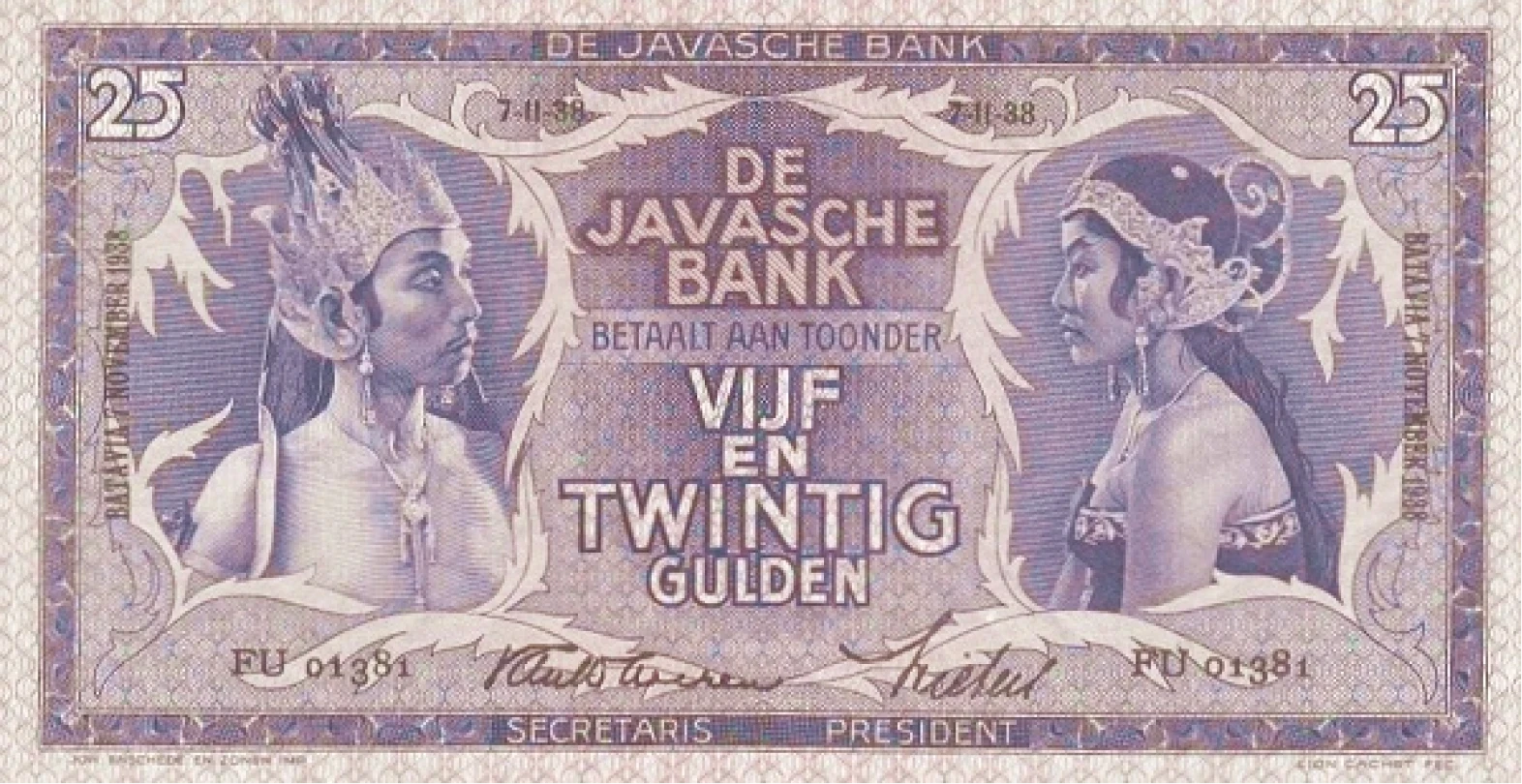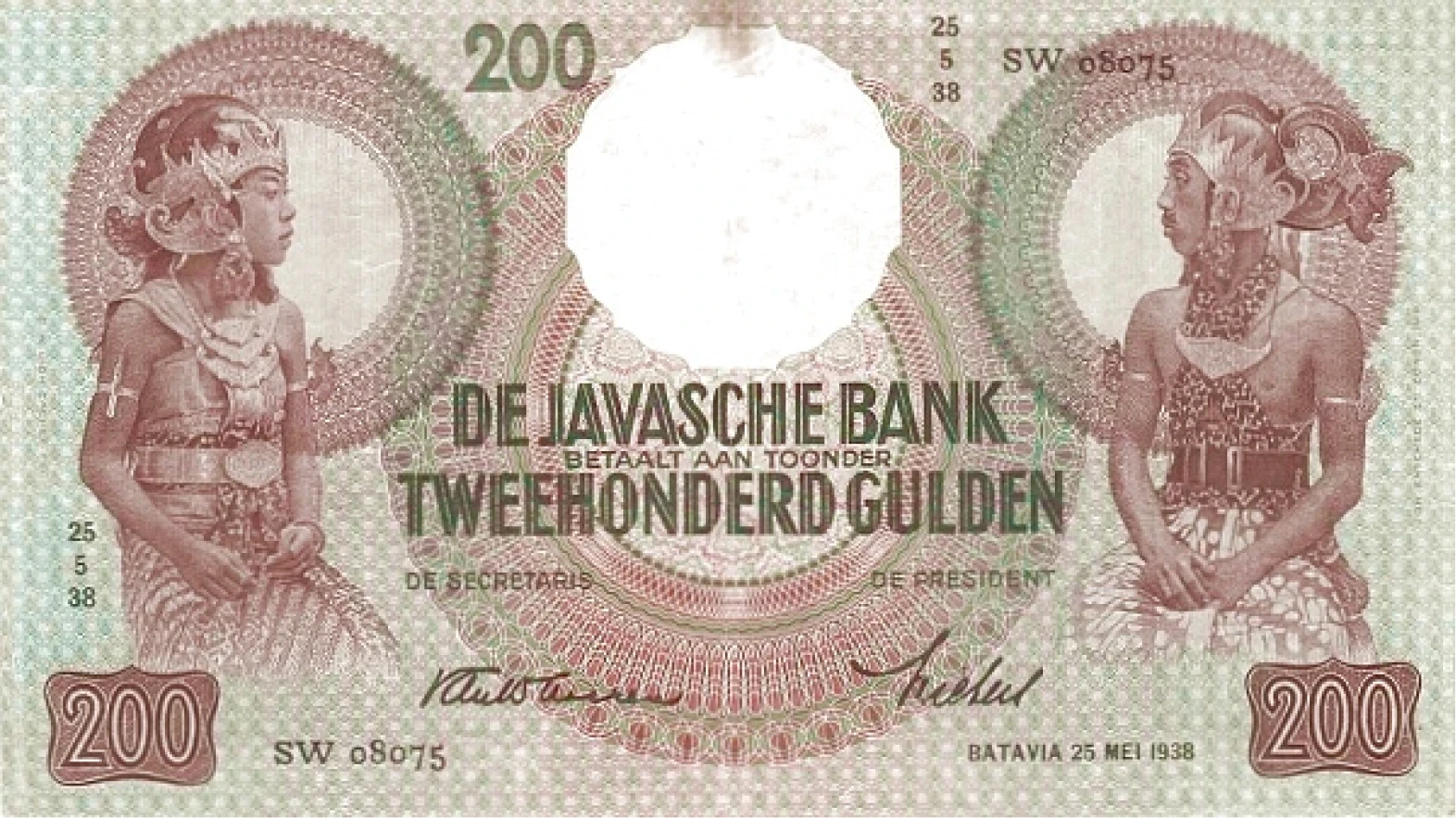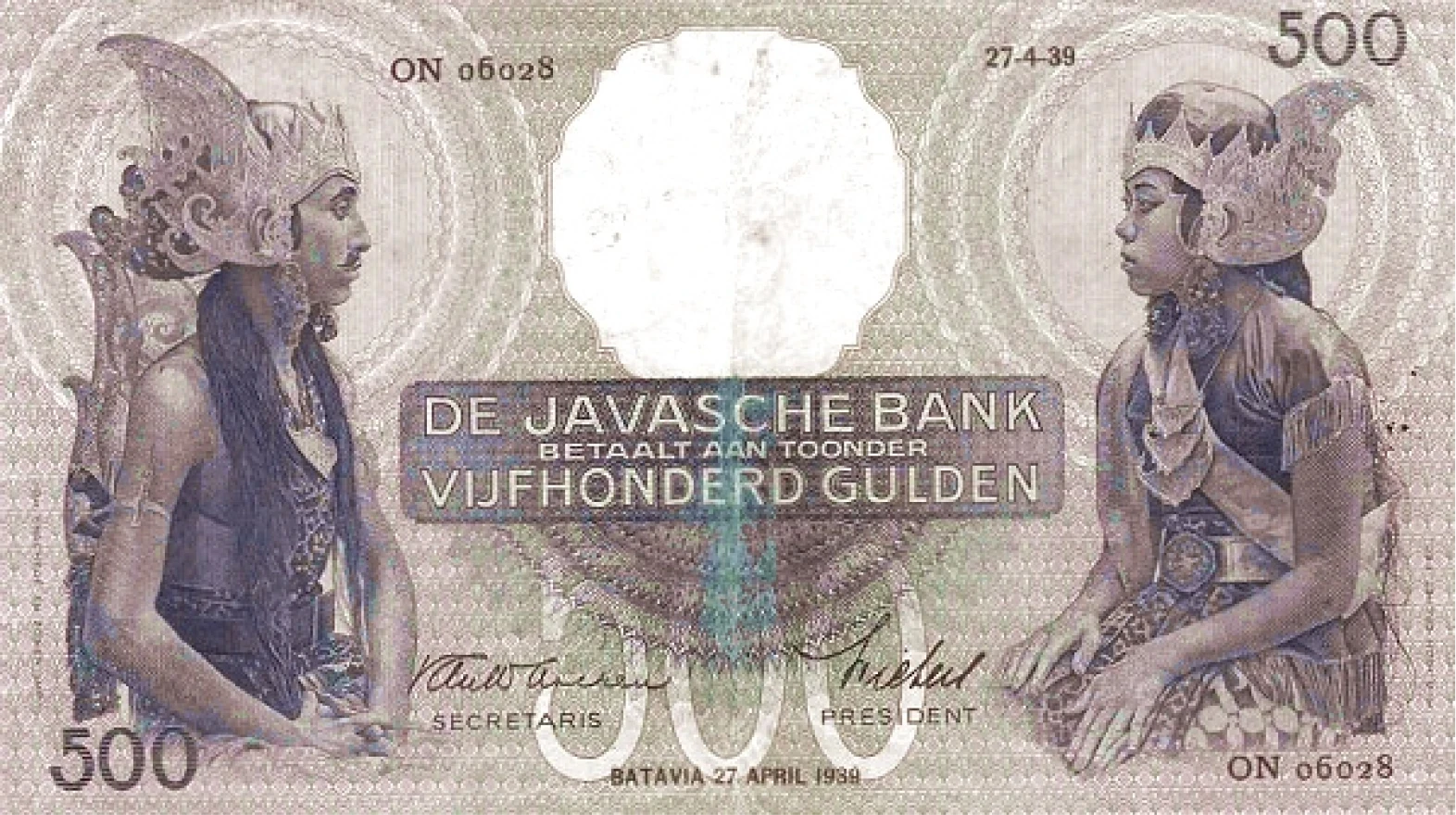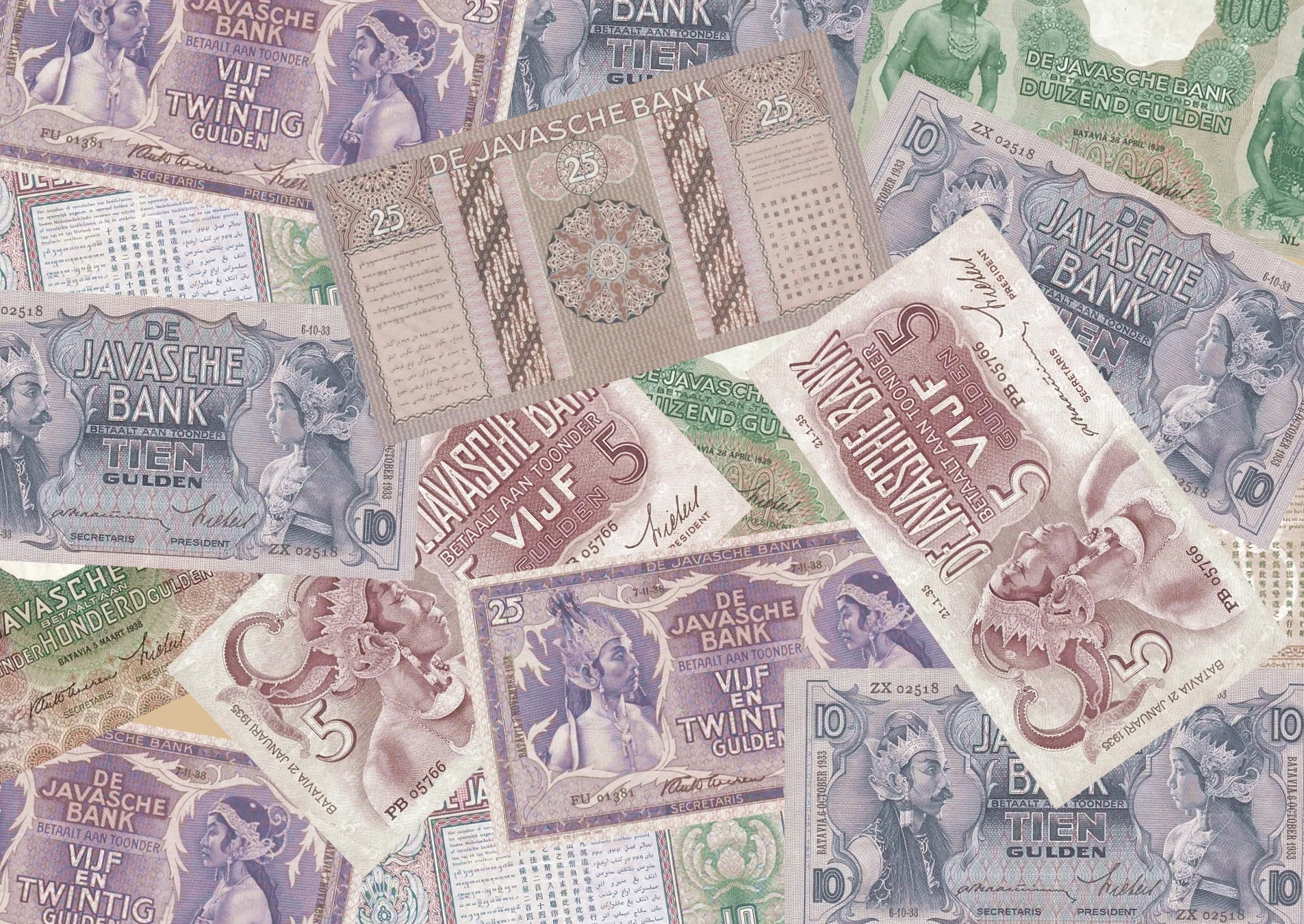
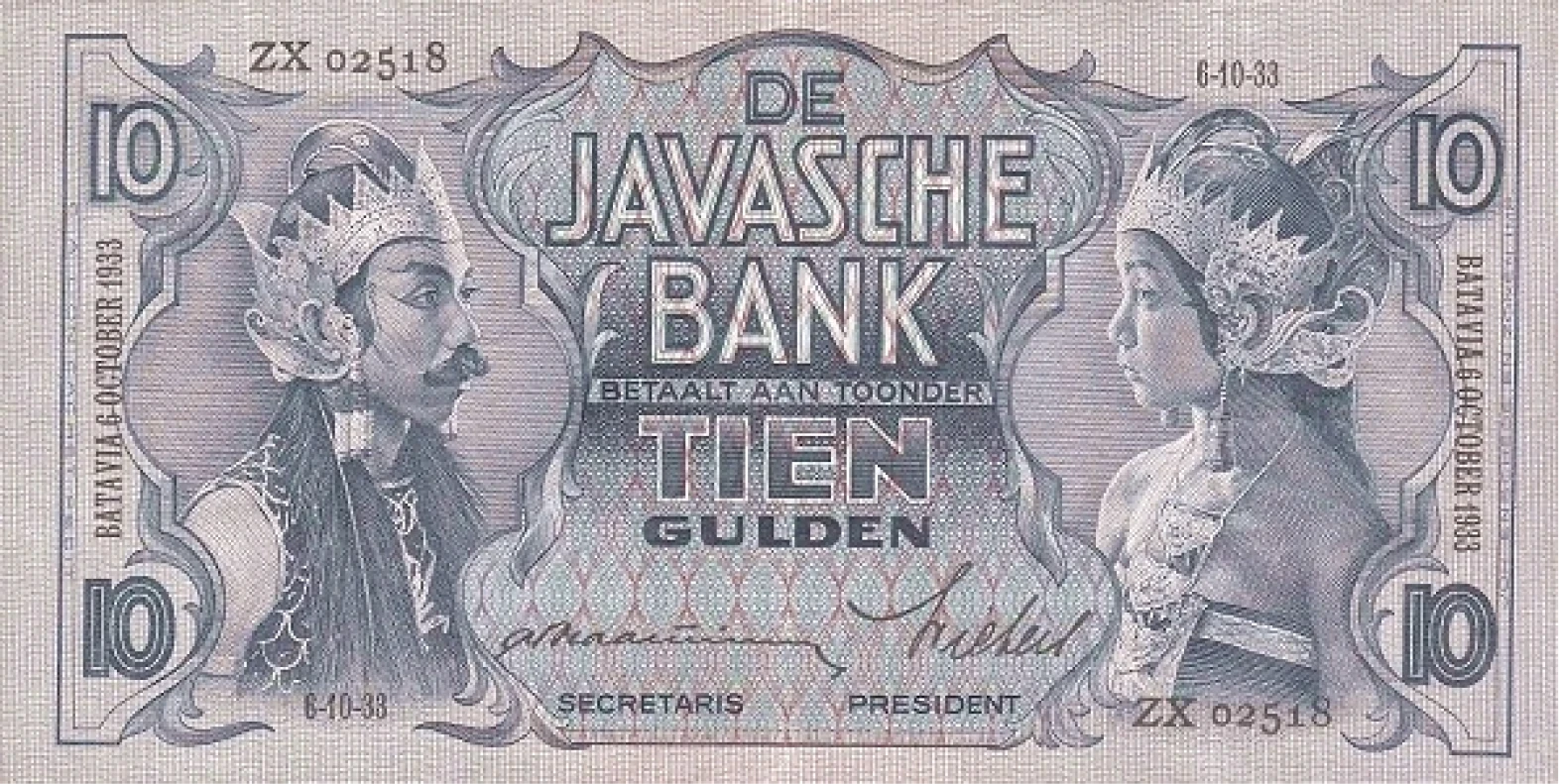
In the 1930s, De Javasche Bank introduced a new family of banknotes depicting figures from Javanese performance. Known as the Wayang Series, the issue consisted of eight denominations, from 5 to 1,000 gulden, bringing Javanese figures and ornament into the visual language of colonial currency.
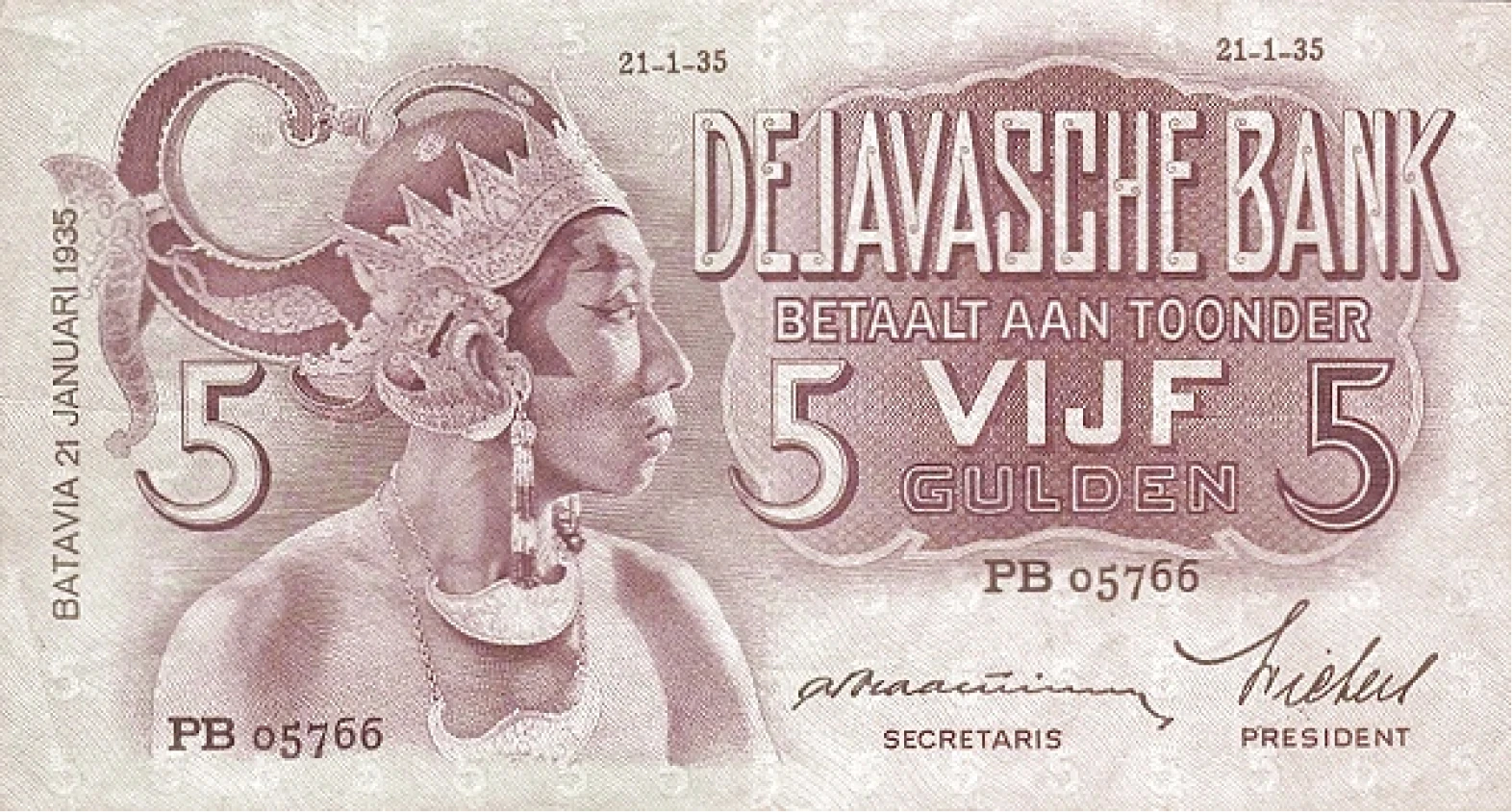
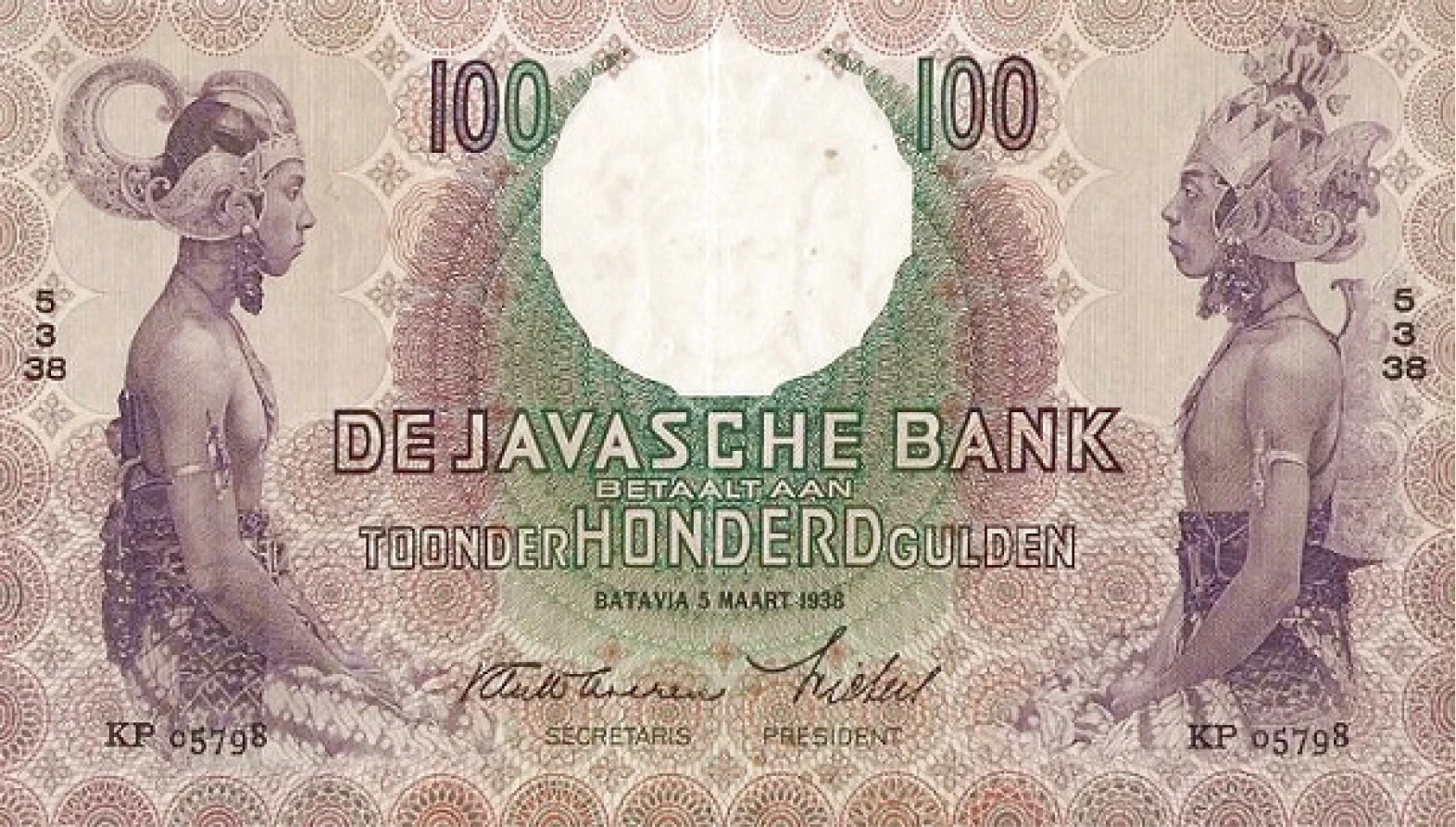
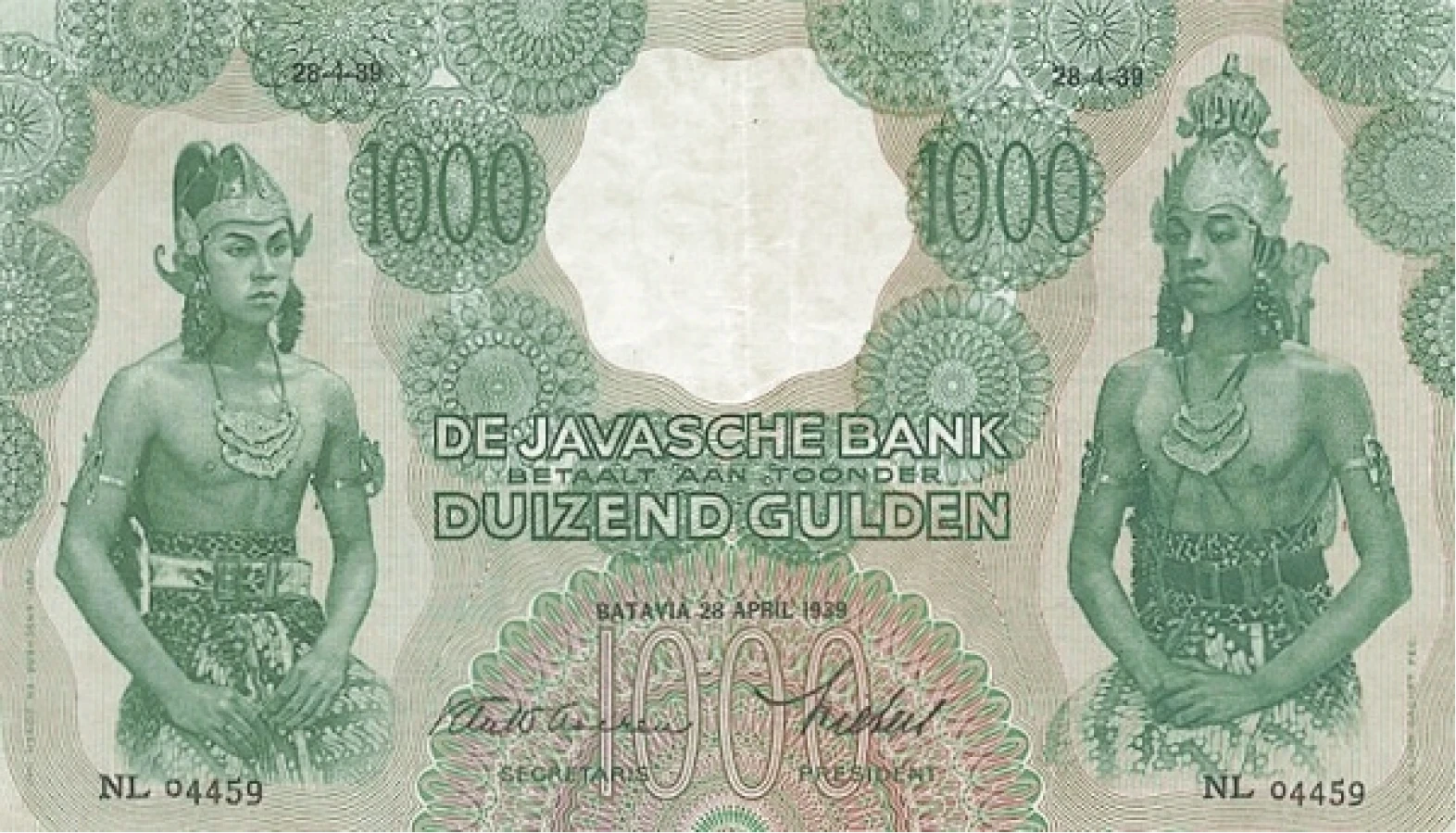
The series was designed by Dutch artist Carel Adolph Lion Cachet, commissioned for the new issue in 1930, and printed by Joh. Enschedé en Zonen in Haarlem. Figures associated with Solo appear on the lower units, while figures associated with Yogyakarta appear on the higher values.
Established under royal charter, De Javasche Bank became the Netherlands East Indies’ circulation bank, authorised to issue and circulate banknotes of 5 gulden and above.
Before Wayang, De Javasche Bank issued several designs, including the Frame, Mercurius and J.P. Coen series, reflecting earlier approaches to colonial banknote imagery.
Designed by Carel Adolph Lion Cachet, the series replaced J.P. Coen’s portrait with figures associated with Javanese performance across eight denominations.
After the Japanese occupation, De Javasche Bank resumed operations. From 1946, DJB currency circulated alongside the newly introduced Oeang Republik Indonesia (ORI).